Introduction
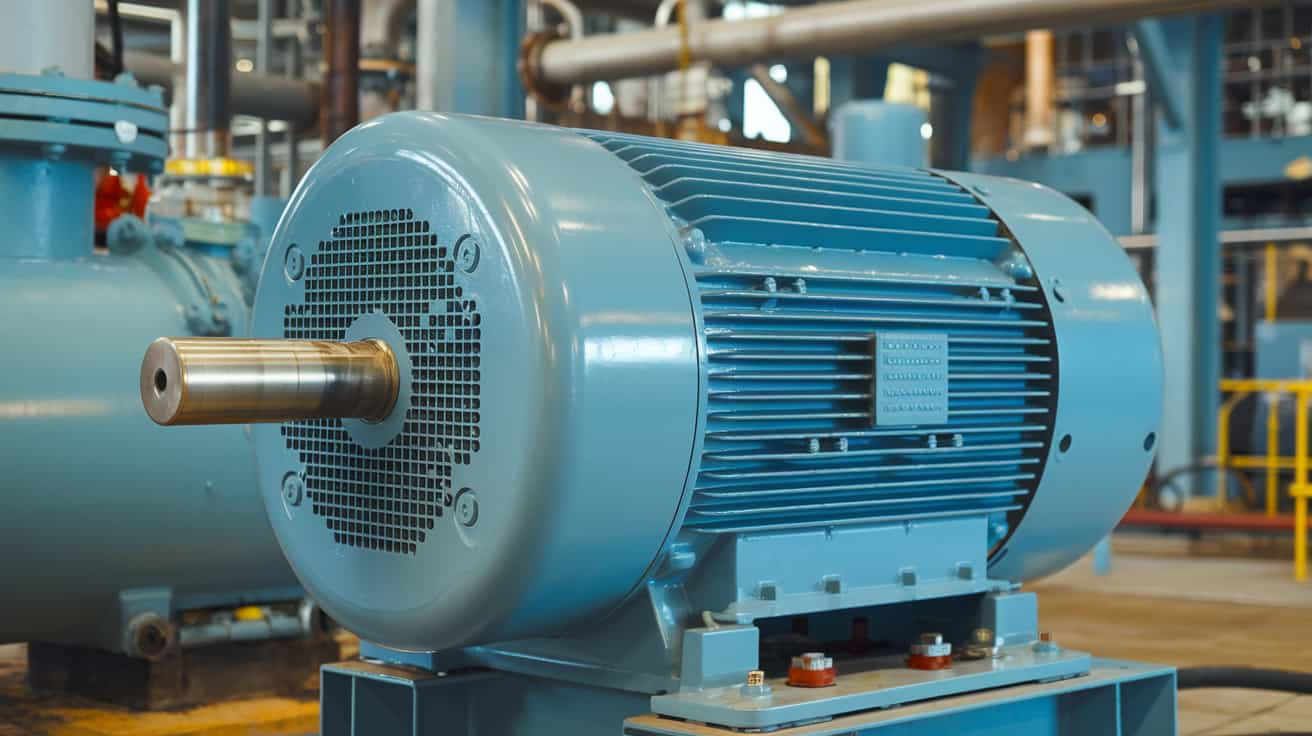
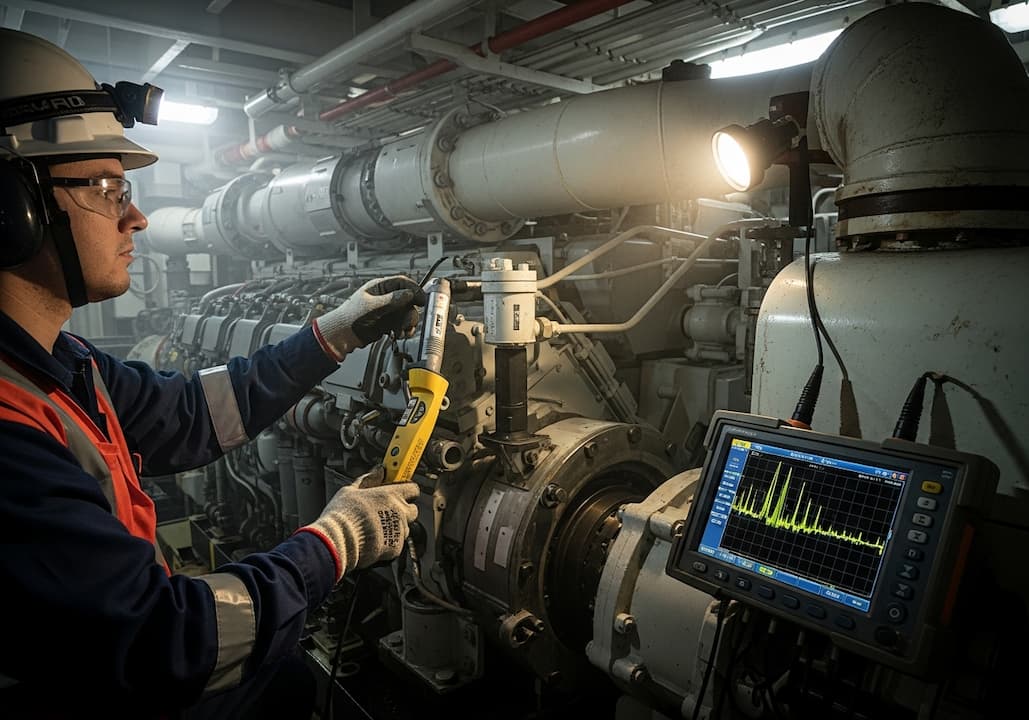
There is something quietly extraordinary about an electric motor. It sits at the heart of almost every industrial process one can name, e.g., driving compressors in oil refineries, turning fans in ventilation systems, powering pumps in water treatment works, spinning centrifuges in pharmaceutical plants. According to the International Energy Agency, electric motor-driven systems account for more than 40 per cent of global electricity consumption. Yet despite this enormous significance, the motor itself is often the least regarded piece of equipment on a plant, tucked away in a corner, overshadowed by the process it serves, and taken for granted until the day it stops.
When that day arrives, the consequences can be severe. An unplanned outage on a critical motor in a petrochemical plant might cost upwards of £200,000 per day in lost production. A failed boiler feed pump motor in a power station can force an entire generating unit offline. In the mining sector, a seized conveyor drive can halt an entire production line. The cost of failure is not merely financial; it extends to safety risks, environmental liabilities and reputational damage.
It is against this backdrop that the discipline of electrical rotating machine maintenance, repair, and overhaul (MRO) assumes its true importance. Far from being a straightforward task of swapping out parts or replacing copper, the professional repair of an electric motor is a sophisticated engineering process. It demands an intimate understanding of electromagnetic design, materials science, thermodynamics, mechanical engineering and quality assurance. It requires adherence to a web of international standards, such like IEC 60034-23, IEEE 1068, EASA AR100, and it calls for the kind of practical judgement that comes only from years of hands-on experience.
1. When a Motor Arrives: Initial Assessment and Data Collection
Every repair begins with a story. The motor arrives at the workshop, sometimes on the back of a lorry, sometimes crated and shipped from the other side of the world. Occasionally it arrives still warm, pulled from service only hours earlier. Other times it has been sitting in a stores compound for months, waiting for a scheduled outage. Whatever the circumstances, the first task is always the same: understanding what has happened and what needs to be done.
The initial assessment is arguably the most critical phase of the entire repair process. A skilled engineer will begin by recording all available nameplate data including rated voltage, current, power, speed, frame size, insulation class, duty rating and enclosure type. This information forms the foundation upon which every subsequent decision is built. Where nameplates are damaged or illegible, which is not uncommon on older machines, the engineer must rely on physical measurements, winding data extraction and reference to manufacturer catalogues.
Beyond the nameplate, the incoming inspection gathers intelligence from the machine itself. External visual examination reveals clues: signs of overheating on the frame, evidence of vibration damage at the feet, corrosion from environmental exposure, or damage to terminal boxes and cable entries. The condition of the coupling half, keyways and shaft extension is noted. Bearing housings are inspected for wear, and any existing vibration data or maintenance records provided by the client are reviewed carefully.
Electrical tests at this stage typically include insulation resistance measurement using a megger at the appropriate test voltage, 500 V DC for low-voltage machines, and higher voltages for medium and high-voltage windings. The polarisation index, which is the ratio of the insulation resistance at ten minutes to that at one minute, provides an indication of the insulation’s condition and moisture content. A healthy winding in a clean, dry machine will typically show an insulation resistance well above 100 MΩ and a polarisation index of 2.0 or greater (typically to 40°C). Values below these thresholds warrant further investigation.
Winding resistance measurements, taken using a four-wire Kelvin bridge method, are compared across phases. A difference of more than two per cent between phases may indicate shorted turns, poor connections or localised damage. These initial readings become the baseline against which the repaired machine will ultimately be judged.
| Inspection Item | Method | Purpose |
|---|---|---|
| Nameplate data recording | Visual / documentation review | Establish design parameters for repair |
| External visual inspection | Visual examination | Identify mechanical damage, corrosion, overheating |
| Insulation resistance (megger) | DC voltage application at 500 V - 5 kV | Assess insulation integrity and moisture ingress |
| Polarisation index | Ratio of IR at 10 min to IR at 1 min | Evaluate insulation condition and ageing |
| Winding resistance | Four-wire Kelvin bridge | Detect shorted turns, poor joints, phase imbalance |
| Shaft and bearing inspection | Dimensional measurement, visual | Identify mechanical wear and damage |
2. Dismantling and Internal Inspection
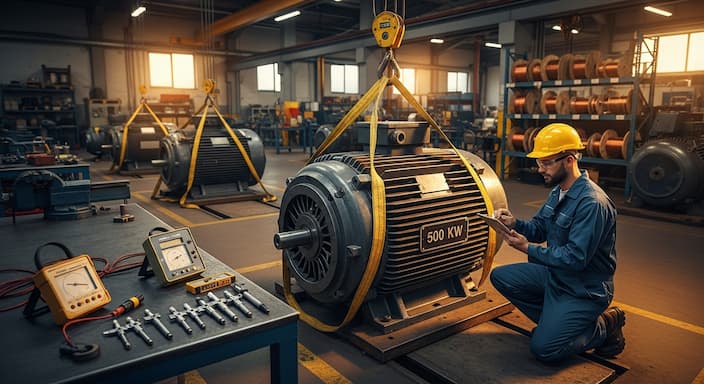
Once the preliminary assessment is complete and a scope of work has been agreed with the client, the motor enters the dismantling phase. This is where the true condition of the machine is revealed, and where care and methodical documentation are paramount.
Before any component is removed, the orientation and position of every part is marked and recorded. The position of the terminal box relative to the drive end, the angular orientation of bearing caps, the shimming arrangement beneath the feet, all of these details matter when it comes to reassembly. Photographs are taken at every stage. In our experience, the discipline of thorough documentation during dismantling saves considerable time and prevents errors during reassembly.
The rotor is extracted from the stator bore with great care, using jacking bolts and guide rails to prevent damage to the stator winding end-turns and the rotor surface. For larger machines, this operation requires an overhead crane and purpose-built extraction equipment. Packing material is placed between the rotor and stator to protect the air gap surfaces during withdrawal.
With the rotor removed, the internal inspection can begin in earnest. The stator bore is examined for signs of rotor rub, which would indicate bearing wear or misalignment. The winding end-turns are inspected for looseness, cracking, discolouration from overheating, and contamination from oil, moisture or process chemicals. The condition of the slot wedges is checked. Loose or missing wedges allow the conductors to vibrate within the slots, leading to insulation abrasion and eventual failure.
The stator core itself receives particular attention. The laminated core is the magnetic heart of the machine, and its condition directly affects performance and efficiency. The engineer looks for signs of localised overheating (often visible as blue or brown discolouration), lamination damage, and evidence of interlaminar short circuits. In machines that have experienced a winding failure, the area around the fault is often the most heavily damaged, with melted copper, carbonised insulation and fused laminations.
The rotor, whether squirrel-cage or wound, is inspected with equal thoroughness. Squirrel-cage rotors are examined for cracked or broken bars, which can be detected by visual inspection, a growler test or more advanced methods such as single-phase rotor current testing. The end rings are inspected for cracks, particularly at the joints between bars and rings. Wound rotors have their slip rings, brushgear and winding connections examined for wear, burning and contamination.
3. Winding Removal and Stator Core Assessment
If the assessment confirms that a rewind is necessary, and it is worth noting that not all repairs require rewinding; sometimes cleaning, re-varnishing and re-insulating can restore a machine to full service. The old winding must be removed. This is where the process demands its greatest care, because the stator core must emerge from the operation in good condition if the repaired machine is to perform as intended.
The Burnout Process
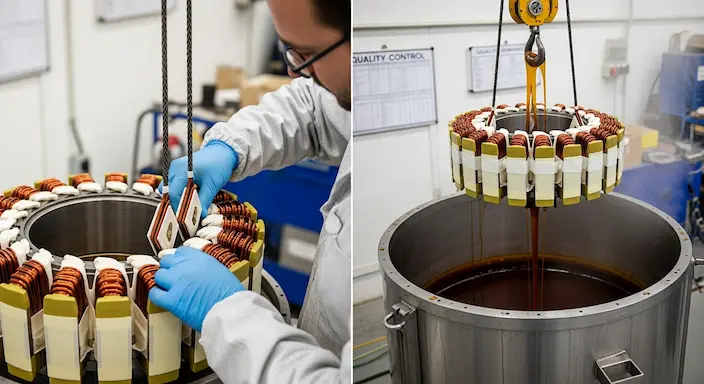
The standard method for winding removal in low and medium-voltage machines is thermal burnout, in which the stator is placed in a purpose-built oven and heated to a temperature sufficient to break down the insulation and varnish binding the winding to the core. This renders the coils loose enough to be withdrawn from the slots without excessive mechanical force.
The burnout temperature is a matter of considerable importance. Industry research, including the landmark EASA/AEMT study on the impact of motor repair on efficiency, has demonstrated that excessive burnout temperatures damage the interlaminar insulation of the core laminations, leading to increased core losses and reduced machine efficiency. For cores with organic (oxide-based) interlaminar coatings, the temperature must be held below 360°C. In general practice, a controlled burnout at 350°C to 370°C, sustained for a minimum of twelve hours, is the accepted standard.
Modern burnout ovens incorporate multiple temperature sensors distributed throughout the chamber, together with water suppression systems that activate automatically should the oven temperature exceed the set point. This level of control is essential. An uncontrolled burnout, where insulation ignites and temperatures spike to 600°C or beyond, can cause irreversible damage to the core steel, increasing core losses by twenty per cent or more and rendering the stator effectively scrap.
Core Loss Testing
Following burnout and winding removal, the stator core is subjected to a core loss test (also known as a loop test or ring flux test). This test measures the watts per kilogramme of core material under a standardised flux density, providing a direct indication of the core’s magnetic health. The test is performed both before burnout (where possible) and after winding removal, and the results are compared. An increase in core losses of more than twenty per cent is generally considered unacceptable and indicates that the core has been damaged.
A remedial action can sometimes be taken where localised hot spots are detected during the core loss test, typically using a thermal imaging camera while the core is energised. Damaged laminations can be separated and re-insulated, or in severe cases, individual lamination packs can be replaced. However, these repairs are time-consuming and costly, and prevention through proper burnout control is always preferable to cure.
Practical Insight: Protecting Lamination Teeth
One of the most common sources of increased stray load losses following a rewind is mechanical damage to the lamination teeth during coil removal. If the coil sides are pulled from the slots with excessive force, the teeth can become splayed or bent, increasing the effective air gap and disturbing the magnetic flux distribution.
4. Rewinding: The Heart of the Overhaul
The rewinding of an electrical rotating machine is, in many respects, the defining operation of the overhaul. It is the point at which the workshop’s skill, knowledge and quality systems are most clearly tested. A poorly executed rewind can leave a machine with higher losses, reduced efficiency, shorter insulation life and increased susceptibility to failure. A well-executed rewind, by contrast, can restore a machine to its original performance or, in some cases, improve upon it.
Preserving the Electromagnetic Design
The fundamental principle governing any rewind is that the electromagnetic design of the machine must be faithfully reproduced. This means maintaining the same number of turns per coil, the same coil pitch, the same winding configuration (whether concentric or lap), and the same or greater copper cross-sectional area per conductor. Any deviation from the original design parameters will alter the machine’s performance characteristics, e.g., its magnetising current, power factor, starting torque, full-load slip and efficiency.
The mean length of turn (MLT) is a particularly critical parameter. Every millimetre added to the MLT increases the resistance of the winding, which in turn increases the stator copper losses. For a typical four-pole induction motor, stator copper losses account for roughly 30 per cent of total losses above half load, making even modest increases in winding resistance significant. Skilled rewinding practice aims to achieve the same or shorter MLT than the original, through careful coil forming and tight, consistent insertion technique.
The coil pitch factor, defined as Kp = cos[(pole pitch − coil pitch) × 90° / pole pitch], determines how effectively the winding links with the fundamental magnetic flux. Short-pitching is commonly employed to suppress harmonic content, but the degree of short-pitching must match the original design. Altering the pitch changes the harmonic spectrum of the air gap flux, potentially increasing stray load losses and introducing torque pulsations.
Insulation Systems
The insulation system is the barrier that separates the electrical conductors from the earthed core and from one another. Its integrity determines the life of the machine. Modern insulation systems are classified by thermal endurance according to IEC 60085, with Class F (155°C) and Class H (180°C) being the most common in industrial machines.
For low-voltage random-wound machines, the insulation system typically comprises slot liners (Nomex or equivalent), phase insulation, slot wedges and an overall varnish or resin treatment. The turn-to-turn insulation is provided by the enamel coating on the magnet wire itself. In machines driven by variable frequency drives (VFDs), this turn-to-turn insulation is subjected to severe voltage stress from the steep-fronted pulses generated by the inverter, pulses that can exceed 20,000 switching events per second. For such applications, wire with enhanced enamel coatings (double or triple build) and supplementary phase insulation are essential.
For medium and high-voltage form-wound machines, the insulation system is considerably more complex. The ground wall insulation comprises multiple layers of mica tape, consolidated with epoxy or polyester resin through either a resin-rich (RR) process or vacuum pressure impregnation (VPI). The voltage gradient at the slot exit must be managed through the application of outer corona protection (OCP) coatings, which grade the electric field and prevent surface partial discharge. At the coil ends, stress-grading tapes control the voltage distribution and suppress end-winding corona.
| Method | Process | Advantages | Typical Application |
|---|---|---|---|
| Dip and bake | Winding immersed in varnish and oven-cured; minimum two cycles | Simple equipment, suitable for smaller machines | Low-voltage motors up to approximately 100 kW |
| Trickle impregnation | Varnish applied by drip whilst winding is rotated and heated | Good penetration, controlled application | Medium-sized low-voltage machines |
| Vacuum pressure impregnation (VPI) | Winding placed in vacuum vessel; resin introduced under pressure | Superior void-free penetration, excellent mechanical and thermal bonding | High-voltage machines, critical applications |
Medium-Voltage Rewinding: A Specialist Undertaking
The rewinding of medium-voltage machines represents one of the most demanding challenges in the field. The insulation system must withstand not only the operating voltage but also transient overvoltages, partial discharge activity and the thermal cycling imposed by load variations over a service life that may be expected to exceed twenty-five years.
Prototype coil testing is a critical element of any high-voltage rewind programme. Before committing to the manufacture of a full winding set, one or more prototype coils are subjected to a rigorous battery of tests. These typically include dielectric loss measurement (tan δ), tip-up testing to assess the voltage dependence of the dielectric losses, partial discharge measurement, surge comparison testing at elevated voltage, high-potential withstand testing and, where the application warrants it, a voltage endurance test of several hundred hours at elevated voltage and temperature. Only when the prototype coils have passed all acceptance criteria does full production proceed.
Case Study: Efficiency Preservation Through Controlled Repair
The landmark EASA/AEMT study, conducted on twenty-three motors ranging from 50 to 300 horsepower, demonstrated conclusively that the impact of repair on motor efficiency depends entirely on the quality of the repair process. In the first stage of the study, where no specific controls were applied, efficiency losses of 0.3 to 1.0 percentage points were observed. In the second and third stages, where burnout temperatures were controlled, core losses were monitored, and winding parameters were maintained, the efficiency change fell within ±0.2 percentage points. In several cases, efficiency actually improved after the rewind. This study remains one of the most important pieces of evidence supporting the viability of professional motor repair as an alternative to replacement, and its findings inform our practice at every level.
5. Mechanical Repair and Component Restoration
Whilst the winding receives the greatest attention in any discussion of motor repair, the mechanical components of the machine are equally critical to its reliable operation. Bearings, shafts, housings, cooling systems and sealing arrangements all demand careful inspection, measurement and, where necessary, restoration.
Bearing Assessment and Replacement
Bearings are the components most frequently replaced during an overhaul, and for good reason. They are the primary wear items in any rotating machine, and their condition directly affects vibration levels, noise and operational reliability. Rolling element bearings are inspected for signs of spalling, pitting, cage wear, discolouration from overheating and electrical discharge machining (EDM) damage, the latter being an increasingly common issue in motors driven by variable frequency drives.
Replacement bearings must match the original specification precisely: the same bore, outside diameter, width, internal clearance class (typically C3 for electric motors), cage material and lubrication arrangement. Bearing fitting is performed using induction heaters, which expand the inner race uniformly and allow it to slide smoothly onto the shaft journal without the application of mechanical force that could damage the rolling elements or raceways.
For machines fitted with plain (sleeve) bearings, the inspection is more involved. Babbitt-lined bearings are examined for signs of fatigue cracking, wiping, scoring and erosion. Bearing clearances are measured and compared with the manufacturer’s tolerances. Where clearances have opened beyond acceptable limits, the bearing shells may be re-babbitted and re-machined, or replaced entirely. Oil seals, oil rings and lubrication passages are cleaned, inspected and restored as necessary.
Shaft and Mechanical Component Restoration
Shafts are measured at all critical diameters, e.g., bearing journals, seal faces, rotor core seat and coupling extension. Using precision micrometers and, where appropriate, roundness measuring equipment. Wear, scoring or corrosion at bearing journals can be corrected by precision grinding or, where the material loss is more significant, by metal spraying followed by grinding to the required finish and tolerance.
Keyways are inspected for wear and deformation. Coupling halves are checked for fretting, corrosion and damage to the taper bore or keyway. The rotor assembly is dynamically balanced to the appropriate grade, typically G2.5 for high-speed machines and G6.3 for general industrial motors, in accordance with ISO 21940-11. Balancing is performed on a precision balancing machine, with correction masses applied as required. In our workshop, we routinely achieve balance grades well within the specified tolerances, and we regard this as one of the most important contributors to low vibration and long bearing life in the repaired machine.
6. Electrical Testing: The Final Arbiter of Quality
If the initial assessment tells the story of why a motor came in for repair, the final testing tells the story of whether the repair has been successful. Electrical testing is the definitive quality gate through which every repaired machine must pass, and its thoroughness is a direct reflection of the workshop’s commitment to quality.
Insulation Resistance and Polarisation Index
The insulation resistance test is repeated on the completed winding, this time with the expectation of substantially higher values than those recorded on the incoming machine. A newly varnished and cured winding in a clean, dry machine should exhibit insulation resistance values well in excess of 500 MΩ, and a polarisation index of 2.0 or above. These values confirm that the insulation system is sound and free from moisture or contamination.
Surge Comparison Test
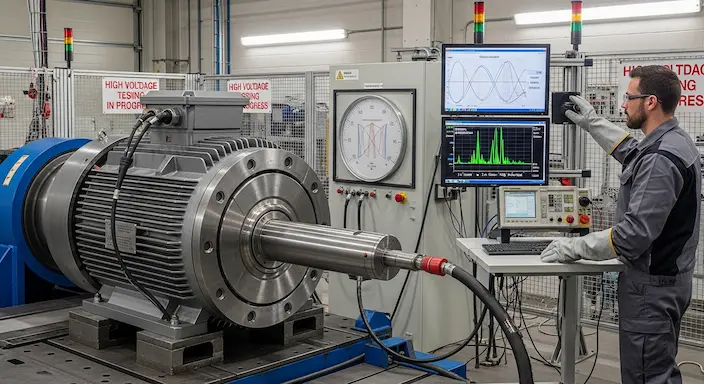
The surge comparison test is one of the most powerful tools available for detecting turn-to-turn insulation weaknesses. A high-voltage pulse is applied to each phase of the winding in turn, and the resulting oscillatory waveform is displayed on a screen alongside the reference waveform from an adjacent phase. Differences in the waveforms of amplitude, frequency or decay rate indicate variations in the inductance of the coils, which can be caused by shorted turns, incorrect turn counts or other winding faults. The test voltage is typically set at 2U + 1000 V, where U is the rated line voltage, in accordance with EASA AR100.
High-Potential Withstand Test
The high-potential (hipot) test subjects the ground wall insulation to a voltage significantly above the operating level, confirming its ability to withstand transient overvoltages in service. For AC hipot testing, the standard test voltage is 2U + 1000 V applied for one minute. The DC equivalent, often preferred for field testing, is 1.7 times the AC test voltage. Throughout the test, the leakage current is monitored; a sudden increase or breakdown indicates an insulation defect.
Winding Resistance Verification
The winding resistance of the completed machine is measured and compared across phases. The maximum permissible difference between phases is typically three per cent, though in practice a well-wound machine will show phase-to-phase variation of less than one per cent. The absolute resistance values are compared with the design calculations and the original machine data, providing confirmation that the correct conductor size and turn count have been used.
| Test | Standard Reference | Test Voltage / Condition | Acceptance Criterion |
|---|---|---|---|
| Insulation resistance | IEEE 43 | 500 V–5 kV DC for 1 min | >100 MΩ (untreated); >500 MΩ (treated) |
| Polarisation index | IEEE 43 | Ratio of IR at 10 min / IR at 1 min | ≥2.0 |
| Surge comparison | EASA AR100 / IEEE 522 | 2U + 1000 V | Matching waveforms between phases |
| High-potential (AC) | IEC 60034 / IEEE 95 | 2U + 1000 V for 1 min | No breakdown; stable leakage current |
| Winding resistance | EASA AR100 | Four-wire Kelvin bridge | ≤3% variation between phases |
| Core loss test | EASA AR100 | Loop/ring flux at rated flux density | <20% increase over pre-repair value |
| Vibration | ISO 10816-1 / ISO 20816 | No-load run at rated voltage and frequency | Within Zone A or B severity limits |
No-Load Run Test and Vibration Assessment
The assembled machine is subjected to a no-load run test at rated voltage and frequency. During this test, the no-load current is measured and compared with the expected value, typically 25 to 40 per cent of full-load current for a standard induction motor. The current balance between phases is checked; an imbalance of more than five per cent may indicate a winding or magnetic circuit fault.
Vibration measurements are taken at the bearing housings in three orthogonal directions (horizontal, vertical and axial). The readings are compared against the severity zones defined in ISO 10816-1 (or its successor ISO 20816), with the expectation that a properly repaired and balanced machine will operate within Zone A or B. Vibration velocity values below 1.8 mm/s RMS are generally considered satisfactory for medium-sized industrial machines.
7. The Repair-or-Replace Decision
One of the questions we are asked most frequently by our clients is whether it makes more sense to repair an existing motor or to replace it with a new one. The answer, as with so many engineering questions, depends on the circumstances. But the decision framework is well established.
For smaller motors, typically those below 30 kW, the economics increasingly favour replacement, particularly where high-efficiency IE3 or IE4 motors are available at competitive prices and where utility rebate programmes further reduce the cost. The labour cost of a full rewind on a small motor can approach or exceed the cost of a new machine, and the energy savings from a higher-efficiency replacement can provide a payback period of less than three years.
For larger motors, those above approximately 150 kW, and especially above 500 kW, the calculus shifts decisively in favour of repair. The capital cost of a new large motor is substantial, lead times can extend to many months, and the existing motor is typically a known quantity, well suited to its application and foundation. A professionally executed repair, performed in accordance with EASA AR100 and IEC 60034-23, will restore the machine to its original performance at a fraction of the replacement cost and in a fraction of the time.
The critical factor in this decision is the quality of the repair itself. A cheaply executed rewind that damages the core, reduces the copper content or uses inferior insulation materials will indeed degrade the machine’s efficiency and reliability, and it is this kind of poor practice that has, unfairly, given motor rewinding a bad reputation in some quarters. A quality repair, by contrast, preserves the machine’s efficiency within ±0.2 per cent of the original, as the EASA/AEMT research has demonstrated, and can extend its service life by decades.
| Factor | Favours Repair | Favours Replacement |
|---|---|---|
| Motor rating | Above 150 kW | Below 30 kW |
| Core condition | Good (core loss increase <20%) | Severe damage or multiple previous rewinds |
| Lead time | Repair faster than new motor delivery | Standard motor available ex-stock |
| Application specificity | Custom frame, voltage or speed | Standard catalogue motor |
| Repair cost ratio | Repair <65% of new motor cost | Repair >65% of new motor cost |
| Energy efficiency | Original motor already high efficiency | Significant efficiency gain available |
| Downtime cost | High (rapid repair preferred) | Low (can wait for new motor) |
8. Standards, Quality Systems and the Mark of a Professional Workshop
The difference between a competent repair and an exceptional one often lies in the quality management system that underpins it. International standards provide the framework within which professional motor repair is conducted, and adherence to these standards is the single most reliable indicator of workshop capability.
EASA AR100 (Recommended Practice for the Repair of Rotating Electrical Apparatus) is perhaps the most widely recognised standard in the field. It provides detailed guidance on every aspect of the repair process, from incoming inspection and testing through winding removal, rewinding, impregnation, assembly and final testing. It references and incorporates requirements from IEC 60034, IEEE 112, IEEE 43, IEEE 522 and numerous other standards.
IEC TS 60034-23 (Repair, Overhaul and Reclamation) provides an international framework for the repair of rotating electrical machines, establishing principles for maintaining or improving machine performance through the repair process. IEEE 1068 addresses the repair and rewinding of motors used in the petroleum and chemical industries, where the consequences of failure are particularly severe.
For machines operating in hazardous (explosive atmosphere) environments, the requirements are more stringent still. IEC 60079-19 governs the repair and overhaul of equipment for use in explosive atmospheres, imposing additional controls on the repair process to ensure that the explosion protection features of the machine are maintained. The IECEx certification scheme provides international recognition for workshops that meet these exacting requirements.
9. Preventive Maintenance: Extending Life Between Overhauls
Whilst this article has focused primarily on the repair and overhaul process, it would be incomplete without addressing the role of preventive maintenance in extending the intervals between major interventions and reducing the likelihood of unplanned failure.
A well-structured maintenance programme for electrical rotating machines encompasses several key activities. Regular insulation resistance testing, performed at consistent intervals and under comparable conditions, provides a trend that can reveal gradual insulation degradation long before it reaches a critical level. Vibration monitoring, whether performed periodically with portable instruments or continuously with permanently installed sensors, detects developing mechanical faults such like bearing wear, imbalance, misalignment, looseness, at an early stage when corrective action is straightforward and inexpensive.
Thermographic surveys using infrared cameras can identify hot spots on motor frames, terminal boxes and connections, indicating potential problems with contact resistance, insulation breakdown or inadequate cooling. Lubricant analysis, for machines with oil-lubricated bearings, provides early warning of bearing wear, contamination and lubricant degradation.
The integration of these condition monitoring techniques into a coherent predictive maintenance strategy, supported by modern data management and trending software, represents the current state of the art in rotating machine maintenance. When executed effectively, it transforms maintenance from a reactive, failure-driven activity into a proactive, condition-driven discipline that minimises both downtime and total cost of ownership.
10. Looking Ahead: The Future of Rotating Machine Repair
The field of electrical rotating machine repair is not standing still. Several trends are shaping its future, and workshops that fail to adapt risk being left behind.
The proliferation of variable frequency drives has introduced new challenges for insulation systems, as the repetitive high-frequency voltage pulses generated by modern inverters impose stresses that older insulation designs were never intended to withstand. Workshops must now be equipped to specify, source and apply insulation systems that are specifically rated for inverter duty, and to test them with methods that reflect the actual service conditions.
The increasing adoption of high-efficiency motor designs such as IE3 and IE4 under the IEC classification places greater demands on repair quality. These machines are designed with tighter tolerances and optimised loss distributions, and any degradation introduced during repair has a proportionally greater impact. The bar for acceptable repair quality is rising, and rightly so.
Digital technologies are beginning to transform the repair workshop itself. Automated winding data extraction, digital quality records, remote condition monitoring and the use of computational tools for electromagnetic design verification are all becoming more commonplace. The concept of the digital twin, a virtual replica of a physical machine that can be used for simulation, diagnostics and lifecycle management, holds particular promise for high-value rotating assets.
Yet amidst all this technological advancement, the fundamental truth remains: the quality of a motor repair depends, above all else, on the skill and knowledge of the people who perform it. Machines can be modelled, processes can be standardised, and tests can be automated, but the judgement to recognise a subtle problem, the dexterity to wind a coil with precision, and the experience to know when something does not look or feel right. These are human qualities that no algorithm can replace.
The repair, overhaul and maintenance of electrical rotating machines is not merely a technical service; it is a discipline that sustains the industrial infrastructure upon which modern society depends. When performed with skill, knowledge and integrity, it preserves critical assets, conserves energy, reduces waste and contributes meaningfully to the operational resilience of every sector it serves. That is the standard to which we hold ourselves, and it is the standard our clients have come to expect.